
Pull To Refresh Co-Founder and CEO Arin Crumley Is Turning Municipal Waste Into Durable Carbon Removal
Mar 06, 2026
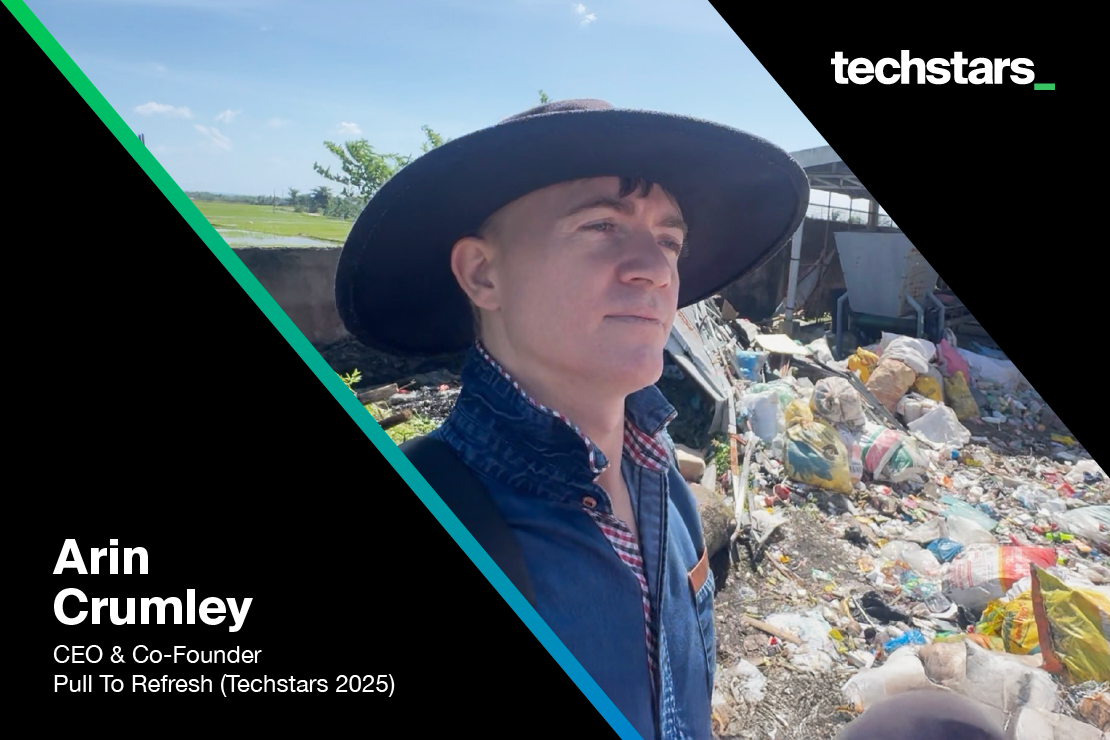
Arin Crumley is CEO and co-founder of Pull To Refresh (Techstars 2025), developing hard-tech carbon removal solutions from waste. An XPRIZE Carbon Removal Top 100 (2024) honoree and Ocean Impact Pitchfest finalist, he previously pioneered early digital film production and distribution in collaboration with teams at Google, YouTube, and the Sundance Channel. His work has been covered by MIT Technology Review, Fast Company, and The New York Times.
What problem did you set out to solve when you started your company?
Our long-term vision is simple: one day, every major company pays to effectively reverse their emissions. This way they get a stable planet to operate within, and we all get a sigh of relief knowing that climate change is on course to be under control.
We believe the voluntary carbon market is the mechanism that can make our vision a reality. This way, the world isn’t relying on mandates that are regional and easy to dodge by relocating.
Being voluntary allows it to be win-win because of the goodwill generated in consumers when corporations do their part.
But skeptics say it will never happen because to be effective every company on earth would have to spend ~1% of their gross revenue tackling climate change, which they claim no company would ever do.
So you might be shocked to know that there is one giant company who has.
If you look at CDR.fyi, there’s enough transparency to roughly infer that Microsoft spent ~1% of their 2025 gross revenue purchasing carbon removal. That’s astonishing.
Inspired by that, I had AI write a catchy theme song called “The Microsoft Match” that imagines a world where every company eventually follows their bold leadership.
But here is the catch: the market doesn’t just need more supply. Or demand, for that matter. What is really needed is carbon removal that actually shows up on time, so buyers have the confidence to purchase more of it.
Our analysis of delivery slippage predicts billions of dollars in missed carbon removal revenue by 2030 if delivery timeframes aren’t improved.
That’s why we exist. We’re a hard-tech carbon removal company, and our beachhead is waste. We turn the organic fraction of mixed municipal waste into durable carbon removal that we sell to corporations with net-zero goals so they can do “The Microsoft Match.” 🎵 (cue theme song) 🎵
What advice would you give aspiring founders who are just starting out?
At the start, I think it’s smart to work in a domain you love. It’s the best fuel for building obsessively and getting good fast. Once you’re building, you can start looking for real problems people have and where the work feels meaningful. Early on, skill-building matters more than demand or impact, but over time, those naturally matter too.
But in the beginning, don’t worry if they’re not there yet. Just build with humility. It doesn’t have to be grand at first, often the seeds of something enormous are hidden in plain sight, and you find them as you go.
What upcoming goals or initiatives are you most excited about in the next year?
While we’re waiting on the final go-ahead on our pilot, we’re already building the initiative we’re most excited about: our Facility Brain. It’s the system that learns from what actually happens on the ground, what’s in the waste stream, what the sensors pick up, and the patterns that explain cause and effect across the whole process.
We use frontier models every day, but we’ve learned the hard way that general intelligence isn’t the same as domain mastery. So we’re testing a few approaches until we find what works consistently in the real world.
The exciting part is that the pilot doesn’t just prove the facility, it creates the feedback loop that makes a Facility Brain possible.
What motivates you to keep going on the hard days?
When customers ask, "How fast can you get this live?" It reminds me this matters and it’s urgent. On hard days, I make the day small: one concrete win. Progress is the antidote. Better to fail and have a lesson than to wait for perfection and accomplish nothing. Keeping the momentum high keeps morale high.
What’s one aspect of the accelerator experience that surprised you?
We learned you don’t need to have it all figured out upfront.
When we applied to Techstars, we didn’t have a clear revenue model yet. That sounds like a dealbreaker, but they weren’t betting on a perfect idea; they were betting on builders. Our prototypes and execution pace made that visible.
Techstars mentors and our managing director, Tim Grace, then helped us turn the vision into a business, and we’re executing on that now.