
Techstars Mentor Bojan Lazic on Execution, Clarity, and Why Momentum Beats Ideas
Jan 27, 2026
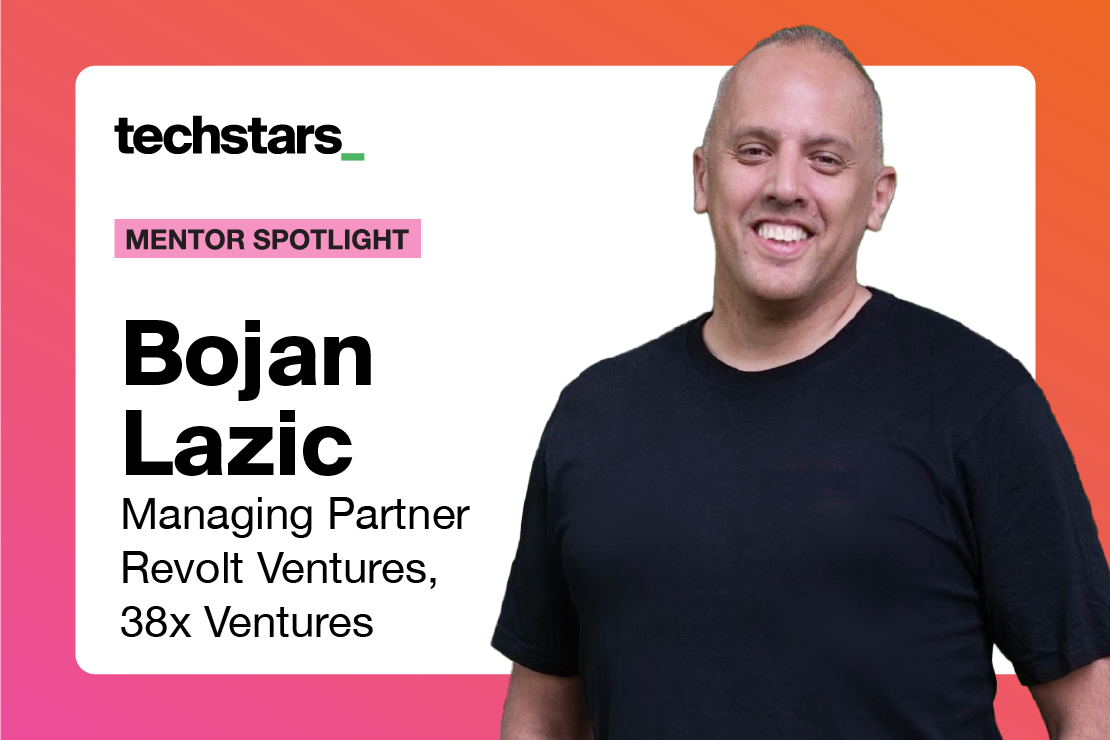
Bojan Lazic is a venture builder and angel investor with 15 years of experience building and scaling companies across Sweden and the United States. His background spans product, strategy, and growth, with deep hands-on involvement in early-stage companies.
He has worked extensively with Techstars as both a Mentor and an All-Star Mentor across multiple programs and has also collaborated with organizations such as Google and Norrsken. Through these platforms, Bojan has mentored more than 600 startups globally, earning a strong reputation among founders and investors for his product instinct, pragmatic approach, and ability to turn ideas into execution.
Known for his direct, no-bullsh*t, founder-first mindset, Bojan is deeply embedded in the entrepreneurial ecosystem, wearing multiple hats as an entrepreneur, angel investor, mentor, and venture partner to numerous VC firms. He brings a rare mix of execution, insight, and genuine commitment to every venture he supports.
Why are you a mentor with Techstars?
The Techstars Give First philosophy aligns deeply with how I work and how I believe strong ecosystems are built. I know how much early guidance can change the direction of a company and a founder’s confidence. I did not have that kind of access early in my career, and I see mentoring as a way to shorten the learning curve for others.
What advice do you find yourself giving most often to founders?
Progress comes from uncomfortable clarity — learning what users truly want, what they will pay for, and what doesn’t matter yet. The goal isn’t to look like a startup. It’s to become one. Move forward every day. Momentum compounds faster than ideas. Execution is the only unfair advantage. An A+ team can turn a C- idea into something valuable. A C- team won’t move the needle, even with an A+ idea.
What impact do you hope to make with the founders you mentor?
If I do my job well, they stop chasing validation and start chasing truth. They learn to listen to users, focus on what moves the company forward, and execute consistently instead of reacting to noise. The real impact isn’t a pitch deck or a demo day, it’s founders who can make good decisions under pressure and build companies long after the program ends.
What's your favorite moment or memory from mentoring that stands out to you?
My favorite moment is when a founder realizes that what they’re doing is compounding the value of their product or company. Not because someone praised them, but because the real evidence is there. You can immediately see it in their face. That shift is everything. Once founders see progress with their own eyes, they start trusting their judgment, and that’s when real momentum begins for them.
What are some of the biggest learnings from your career that you bring as a Techstars Mentor?
Success tells a story. Failure tells the truth.
That’s why I spend less time studying startups that succeeded and more time understanding those that failed. Failure exposes patterns that success often hides. By examining where things broke and why, I help founders recognize early warning signs, confront reality sooner, and avoid repeating costly mistakes.
Describe a situation with a startup founder or team where you felt like you made a difference.
There have been many moments like this, and honestly, founders would probably tell these stories better than I ever could. One recent example is Anur Becirovic; there is a really funny story there.
But the moment I truly realized the broader impact of my mentoring at Techstars was during the Techstars Stockholm program. I joined as a lead mentor for one startup. The way we worked, how we broke down problems, focused on execution, and pushed forward started spreading organically across the cohort. Within weeks, other founders began reaching out directly, and suddenly, the other eleven startups in the cohort wanted sessions with me as well. What stood out to me was that this wasn’t driven by the MD or program managers. It was founder-to-founder discussions about how I work and what I do. Before the next cohort even started, Techstars Stockholm was already receiving inbound requests from startups asking for me as a lead mentor without even meeting me. That eventually caught the attention of David Cohen, which led to my nomination as an All-Star Mentor and requests to mentor teams across Los Angeles, New York, Paris, and Berlin. Many of those requests came directly from founders. That’s when I knew the impact was real and not because of some title, but because founders felt working with me was helping them see clarity and progress and move forward.
How do you encourage startups to stay innovative and adaptable in a rapidly changing market?
I encourage founders to think of their startup like a Rubik’s Cube in motion. Innovation doesn’t come from betting everything on a single perfect move. It comes from making small, reversible decisions, learning quickly, and adjusting based on real feedback from both users and the market. Founders who stay adaptable keep experimenting, stay close to customers, and treat change as a signal, not a disruption. That’s how innovation stays continuous instead of reactive.
What advice do you have for other mentors?
A good mentor needs to be versatile, street-smart, and able to connect dots. Stay informed, but more importantly — stay curious. Don’t tell founders what to do. Listen carefully. Ask a lot of questions. If you do that well, hard truths surface and real opportunities reveal themselves. Your job isn’t to solve their problems; it’s to help them learn how to think and decide.
And one more thing no one says often enough, at least not out loud — learn when to walk away. Some teams aren’t ready. If founders push back on everything, avoid responsibility, or bring a consistently bad attitude, mentoring turns into a bad experience for everyone. Time and energy are finite. Invest them where there is openness, trust, and willingness to grow.