From 7 Startup Weekends to 27: What São Paulo Taught Me About Building Startup Communities, and How We Took It to Portugal
October 29, 2026
By Fernando Jardim, President of the 351 Portuguese Startup Association and International Personality of the Year 2026 (Unicorn Factory Lisboa)
Fernando Jardim started as a Techstars Startup Weekend organizer in São Paulo. Ten years later, he shares how a volunteer-run community grew the city’s startup scene, how he brought the same playbook to Portugal, and what he’d tell any community leader starting out.

I was born in the Techstars community. Not literally, but almost everything I have built in the last 10 years started at a Startup Weekend in São Paulo.
A City Full of Founders, and Very Few Wins
In 2016, São Paulo had talent, money and ambition, but it did not have a working startup community. The city ran only 7 Techstars Startup Weekends a year, and Brazil had no unicorns. Founders kept failing for the same reasons, and they failed alone.
A small group decided that made no sense. It was mostly Startup Weekend leaders and organisers, together with serial entrepreneurs, founders and investors. We did not wait for a government programme or an accelerator. We sat down and built a strategy together, from the ground up.
Start With the Gaps
The method was simple: list what founders are missing, then fill each gap with something the community runs itself.
- Founders didn't know how to build an MVP, so we worked with coding schools to run hands-on sessions.
- There was nowhere to meet a co-founder, so we brought Silicon Drinkabout to São Paulo.
- There were too few chances to start, so we organised more Startup Weekends.
- There was no programme for companies that were starting to scale, so we created SP Stars. It was the first scaleup programme in Brazil run by volunteers from the ecosystem rather than by an incubator or accelerator.
Everything was open source. If someone saw a gap and wanted to create something, they could. There was no formal constitution and no single owner. That community became 011, after São Paulo's area code.
Startup Weekends Are Not Easy To Scale
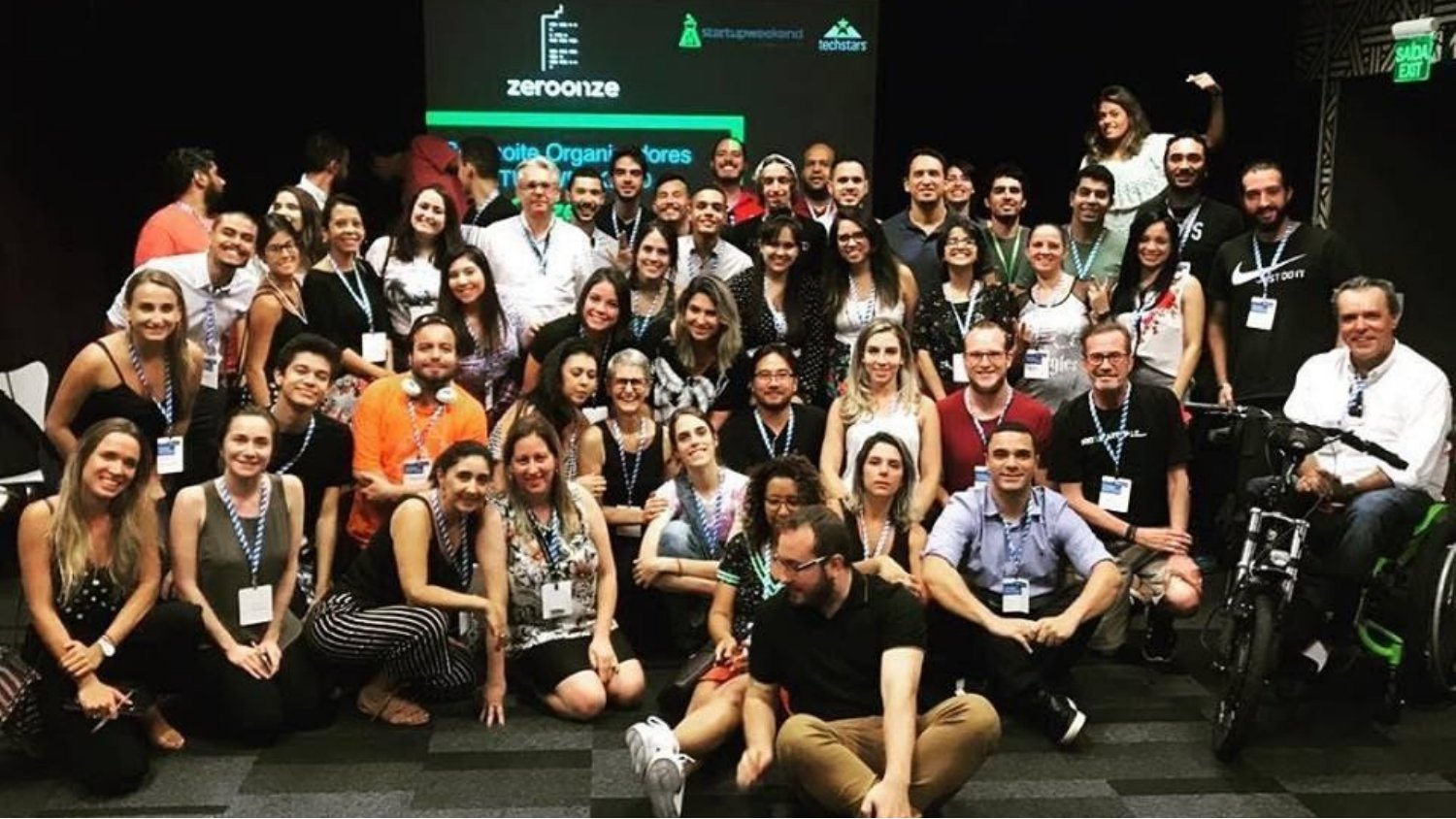
By 2019, São Paulo went from 7 to 27 Startup Weekends a year. That number hides a lot of work. Every Startup Weekend is a small company for a few weeks: a volunteer team finds a venue, mentors, judges and sponsors, sells tickets and runs 54 hours of building. Going to 27 means dozens of teams doing that at once.
The community grew from a handful of people to more than 100 volunteers, and to more than 300 today.
The Funnel That Makes an Ecosystem
Then something started to happen that we had hoped for. The founders who came to their first Startup Weekend or their first Silicon Drinkabout began to succeed. Some of them built scaleups. Brazil got its first unicorns: five in 2018, then five more in 2019.
The people who succeeded gave back. Founders who had grown started programmes for the next level of founders, and the successful ones ran programmes for early-stage founders too. That is the funnel: keep a big pipeline of founders coming in at the top, help them move up, and the ones who make it build the next layer for everyone behind them.
We saw the same pattern at São Paulo Tech Week, which grew to 300 events, many of them run by community leaders. Almost none of those leaders were known names five years earlier. They had come to a Startup Weekend or a Silicon Drinkabout, found the community, grew, and became the experts the ecosystem now relies on.
Today 011 connects more than 2,000 startups, 20+ innovation hubs, and many mentors and experts. Some members were so proud of it that they tattooed the 011 logo. For three years in a row, it was named the best entrepreneurship community in Brazil, ahead of programmes with large public budgets.
Taking the Playbook to Portugal
I moved to Lisbon in 2019, first to Beta-i and then to Lisbon City Council, bringing founders, investors and companies to the city. I started 351, the Portuguese Startup Association, as a one-person effort. Everything we did was built on what São Paulo taught us.
- Start with Startup Weekend. 351 became Techstars' partner in Portugal. In 2025, we ran four Startup Weekends in four cities, and they took 2nd place in Portugal at the European Enterprise Promotion Awards.
- Grow leaders, not only events. In 2024, we brought the Techstars Community Leader Academy to Portugal for the first time, with 40 community leaders in Porto.
- Let the community own it. Portugal Tech Week grew from 100+ events in its first edition in 2022 to 300+ events in 20 cities in 2025, organised by partners and volunteers across the country.
Today, 351 is Portugal's largest startup community, with more than 3,000 members. More than 100 volunteers have run its initiatives over the years. This week, Unicorn Factory Lisboa named me International Personality of the Year. I accepted it on behalf of those volunteers, because none of this is a one-person job.
What I’d Tell Any Community Leader
- Map the gaps with founders, then fill them one programme at a time.
- Keep it open. Let anyone start something, and give them the playbook.
- Build the funnel: today's first-time founders are tomorrow's mentors and organisers.
- Start with a Startup Weekend. Ten years later, it is still the best front door I know.
Fernando Jardim is President of the 351 Portuguese Startup Association, co-founder of Founder Institute Portugal and a Techstars Community All-Star (2023). He started as a Startup Weekend organiser in São Paulo.


